
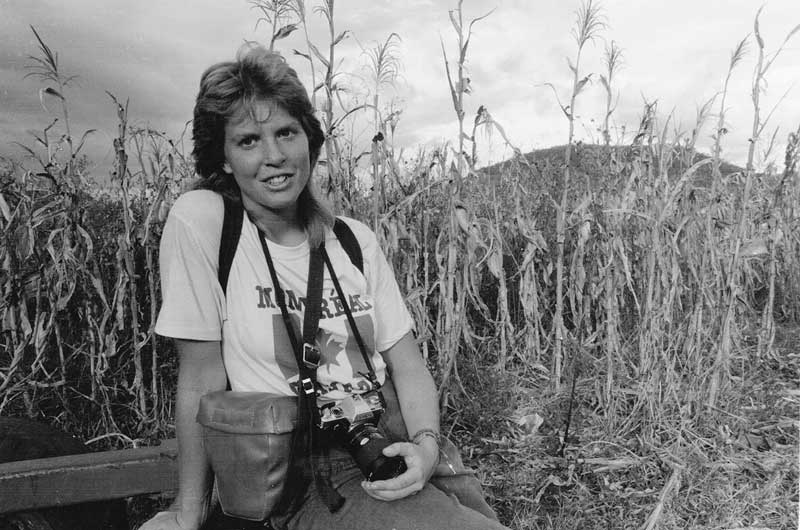
In June 1987, I set off from Montreal on an eight-month trip to Mexico and Central America. These are the letters I sent home, to be photocopied and mailed to friends and family (the technology of the day).
I discovered a lot about the art of writing on this trip, thanks in part to a friend I sometimes travelled with, who sat down every day to write with intention.
The Cold War was in full swing, and Central America was in turmoil. Since the arrival of the Spanish in the Americas in the 16th century, oligarchies had been squeezing peasants and indigenous people onto more marginal lands and into deeper poverty, as land was “developed” into plantations or taken over by foreign mining interests. The same pattern continues today in many parts of Canada, where First Nations continue to have their sovereignty usurped, to the benefit of the oil and mining companies backed by the Canadian government. Extreme poverty and instability in many parts of the world have been created in the same way and for the same reasons, most egregiously in the Congo.
In the Central America of the 1980s, military dictatorships were holding the system in place. Any movement to make life better for the poor, especially if it involved the re-distribution of land, was branded “communist” by the US who backed the dictatorships. With the US against them, those movements did receive attention and a certain amount of support from the US’s Cold War enemies: Cuba and the USSR. The balance was lopsided, however. America’s proximity and strength made life difficult for anyone trying to bring about change that would benefit the peasants who formed the majority of the population.
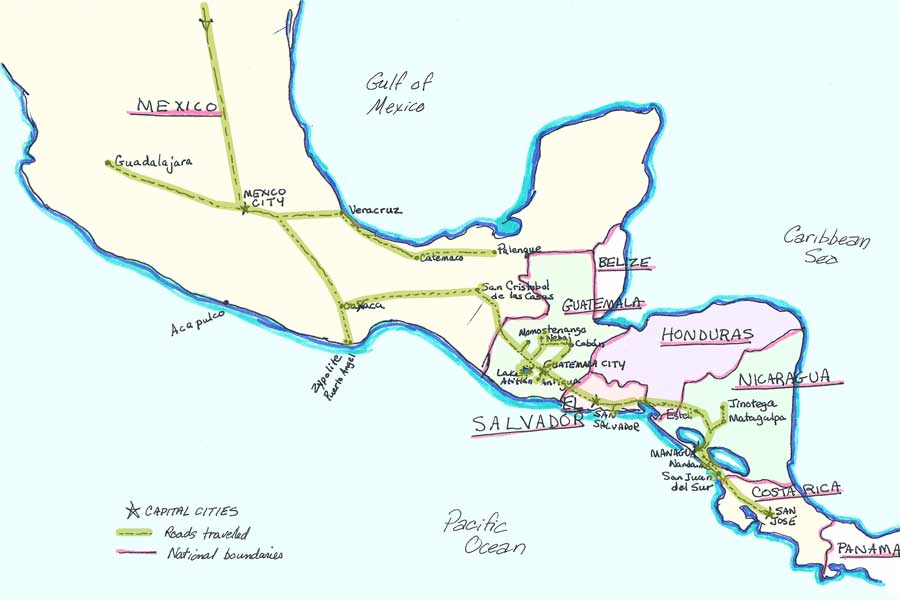
By 1987, the Sandinista revolution in Nicaragua, which had overthrown the US-supported Somoza dictatorship in 1979, had made great changes in health, education, land distribution and culture, but its limited resources were bled in defending the revolution against US-armed and directed Contra forces based in the countries on its borders, Honduras and Costa Rica. El Salvador was in the middle of a 12-year civil war of its own, which was to end in 1992 with a negotiated peace agreement. Guatemala’s majority Mayan peasant population had recently endured extreme genocidal violence designed to suppress any grassroots movement for human rights and justice.
A world-wide solidarity network was both horrified at the role the US was playing in suppressing these movements, and inspired by the possibility of improving the lot of the poor that they represented.
After studying Spanish at home in Montreal, I set out to experience Central America for myself.
First, however, I spent two months in Mexico, which was a very different place.
Note: I’ve broken up the content of the letters into topical chunks. You can go through the whole sequence by following the links at the bottom of each post. The last page is open for comments and discussion.
About the photos
I took a lot of photos on the trip, but lost most of them in a fire some years later. I’m lucky to have pictures from Nicaragua because my father had a set of my slides for making presentations, as well as his own photos and the films I sent back to Canada with him. Any photos without a credit were taken by me or my late father, Flemming Holm.
Other photos were sourced online, mostly on Flickr, and are under a Creative Commons license. I have tried to choose photos that I might have taken myself.