
21. Impressions of Nicaragua in 1987: (a) Economy
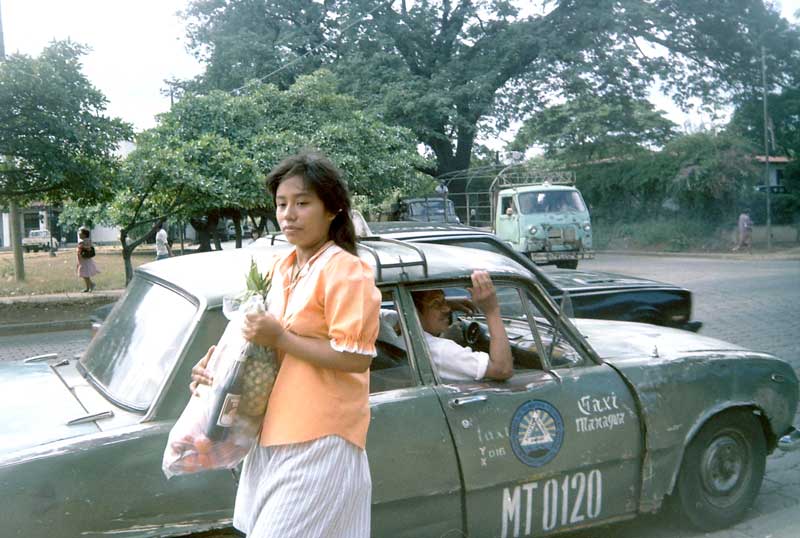
Over the last few years I’ve known a lot of people who have visited Nicaragua. I’ve seen a lot of slide shows. So I arrived with a fair idea of what to expect. Still, there have been a few surprises and certain things that have impacted on me in my first two months here.
Transportation is a nightmare, as I’d heard. Due to the U.S. embargo affecting vehicles, spare parts and fuel, bus passengers ride packed like sardines and have to fight for the privilege of boarding.
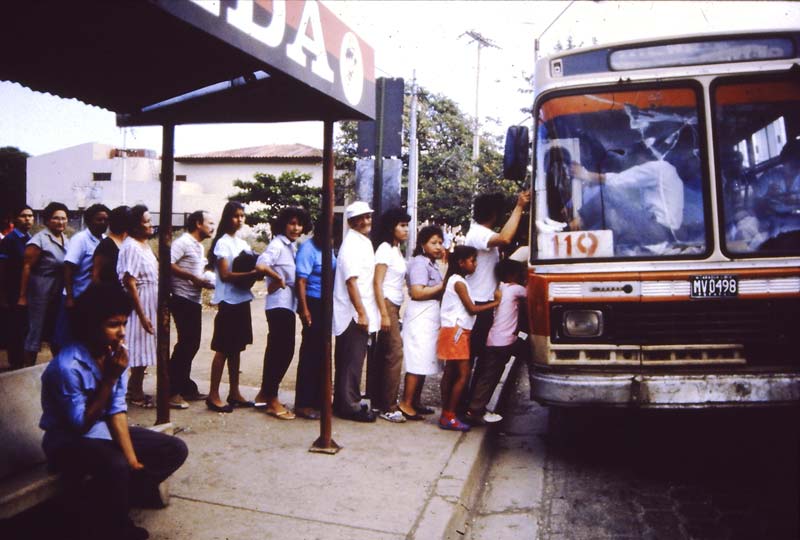
You pick up new survival skills, such as carrying money in your underwear and holding your pack above your head. As several friends had told me, hitchhiking is indeed a more pleasant and usually faster way to get around the country.
The other advice I’d received was to take a good sized bag to carry your money when you exchange your dollars for local currency.
When I entered the country on October 26, the $60 one was obliged to exchange at the border netted 540,000 cordobas, mostly in c1000 and c500 notes. Less than two months later, the official exchange rate has gone from c9000 per $1 to c15,000 per $1, and the black market rate is running around c25,000. They are overprinting c20 and c50 notes as c20,000 and c50,000, and there are no coins in circulation. So money is easier to carry now.
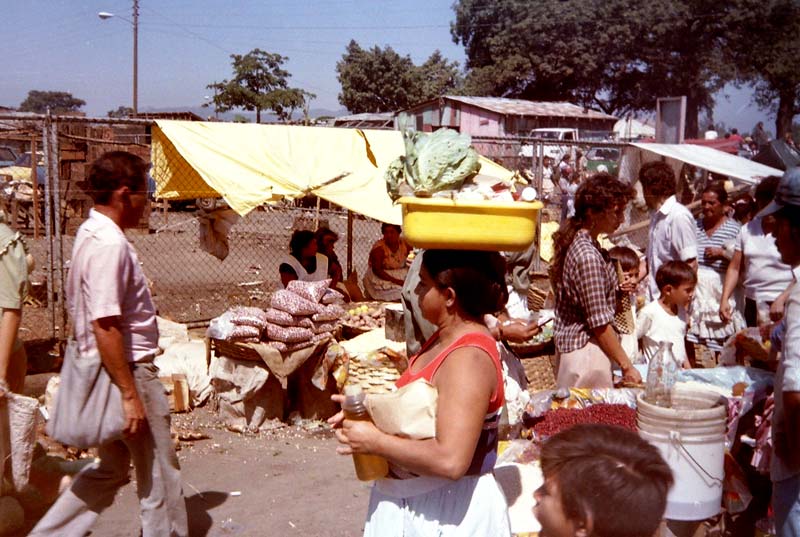
Prices in real terms have gone up since I’ve been here, especially for food, creating real hardships for the average person, especially in Managua. The government is trying to keep inflation down and supply basic needs with a rationing system by which you can buy sugar, rice, soap, oil, etc. at controlled prices (very cheap). In addition, government employees, whose salaries have not been rising with inflation, and are extremely low, have access to special stores where prices are also greatly subsidized. There is a black market in the controlled goods (now, where does the stuff come from?) where cooking oil, for example, is more than $1 per litre, very expensive, especially in a country that adores fried food.
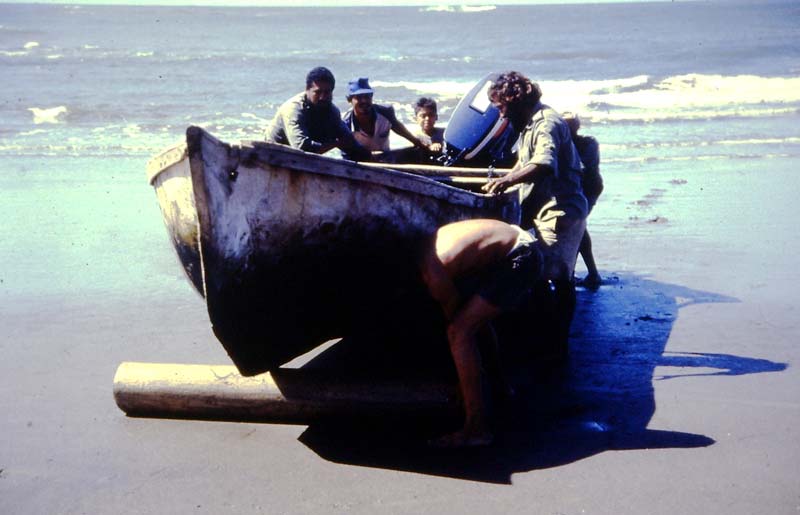
On the other side of the system, the prices that producers get, when they sell to the state as they are supposed to, are not keeping pace with inflation either. This causes discontent, as Dad and I learned when we talked to some fishermen. There are also problems of maintaining supply: Jinotega has been out of soap for a month, while my friends in nearby Matagalpa have a drawer full of it.
The contras, speaking for the U.S., want this system dismantled, saying it is “communist” (as if wartime rationing only happens in communist countries) and inhibits the development of a free market economy. But what would happen to prices, and to the poor majority of people, if the system were withdrawn?