
20. Travels with my Dad in Nicaragua, 1987, Part 2

The second co-operative we visited, named “Casa Blanca” for the old white building which houses its storage and administration facilities, is about twice as old and has twice the number of families as the first co-op.
It is situated in the northern part of Estelí Department, an area that has been seeing Contra activity. The first indications of this were the guns in the vehicles which gave us lifts. All the men of Casa Blanca carry their guns wherever they go, and every night each does a three-hour shift on patrol. They have been so effective that the Contras have never attacked Casa Blanca, although co-ops are generally one of their prime targets.
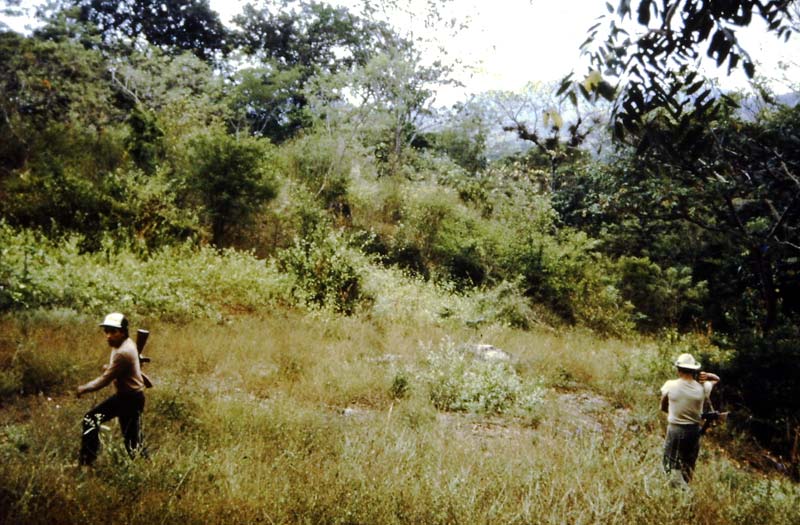
Most of the people of Casa Blanca have moved there from a region very close to the Honduran border where, as they told us, the constant danger of Contra attack prevented them from making a living. Here they are well organized, and the large open valley where they grow tobacco is easier to defend. Still, the need for constant vigilance reduces their productivity, and they long for an end to the war so they can return to the interrupted task of building their future.
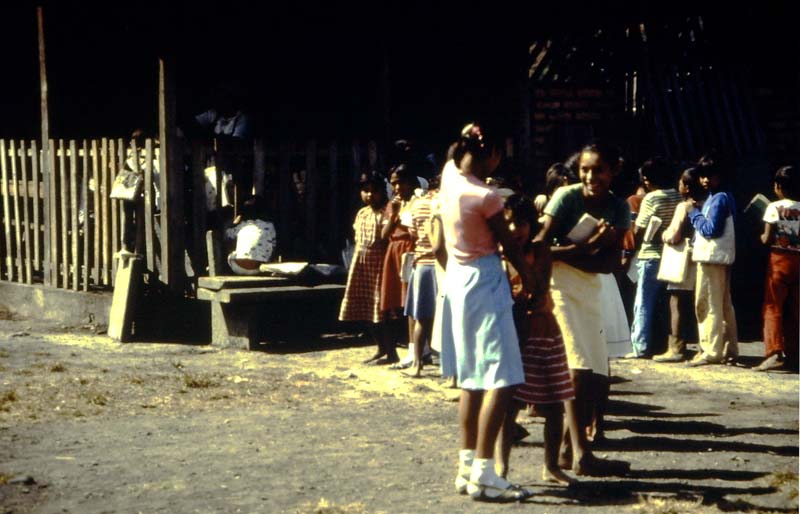
Life at Casa Blanca is more communal than at the first co-operative we visited. For defense purposes, the houses are quite close together in a semi-circle surrounding a school and a daycare. There is a program of two meals a day for children, which is paid for by the government, in an effort to reduce malnutrition. The daycare is three months old, a boon to the many women who work in the fields.
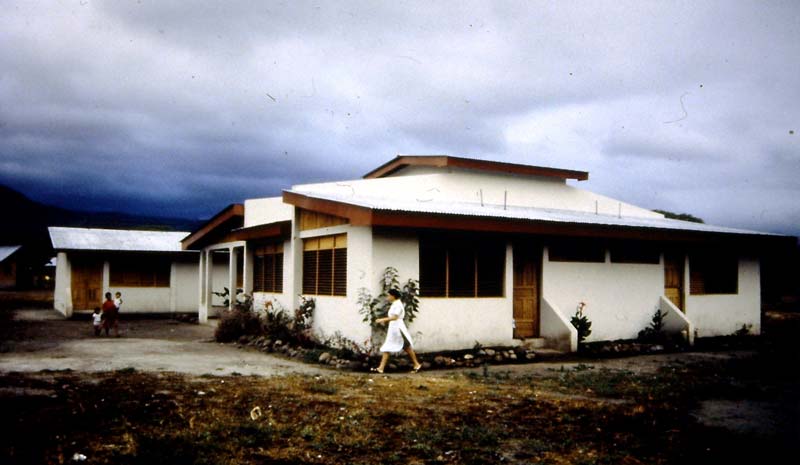
Another striking difference between the two co-ops is the amount of international aid Casa Blanca has received. The daycare was built by the Swedish government, and frankly looks as if it had just flown in from Sweden. It is equipped for running water and gas, neither of which is available. In fact, the community is building, at its own expense, a kitchen that will use firewood. The three-room school was built by a German brigade.
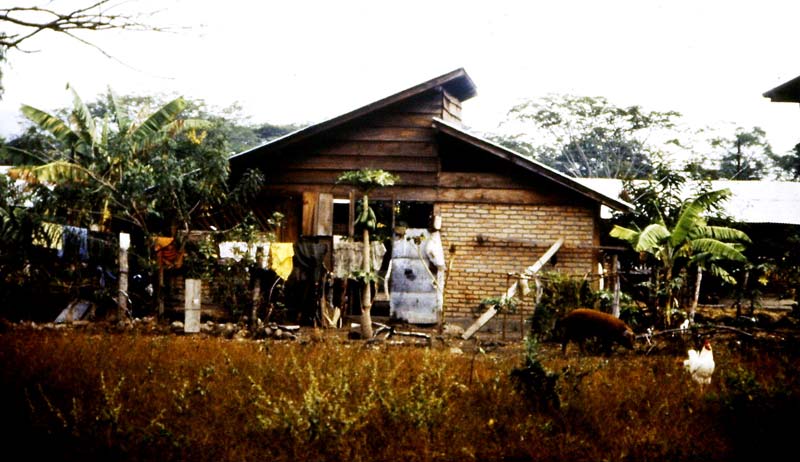
The houses, although like the school are made of local materials and were built by the people themselves, were designed by “someone from the government.” They are uniform, architecturally pleasing, and seem to be well adapted to the lifestyle and resources available. The overall impression when you first walk in is of a housing subdivision somewhere in Canada, making Casa Blanca something of a showcase. But that is on the surface. The reality is that the cooperative is short about 18 houses to accommodate new members, and the families are doubling up or living temporarily in squalid conditions in the common buildings.
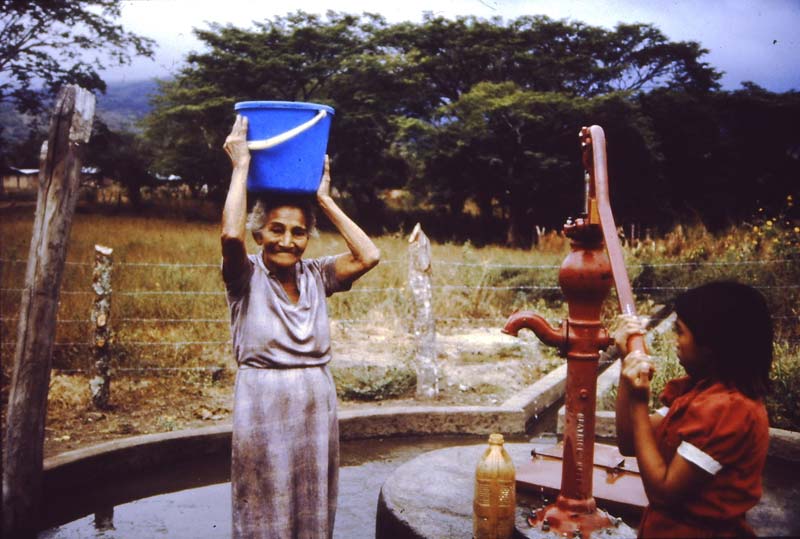
There is a cement shortage. People are as poor as anywhere else in Nicaragua. And there is the reality of always having to carry a gun to protect one’s home, family and work, against a group of mercenaries who rhetorically compare themselves to the French Resistance.
In comparing the two co-ops and talking with the leaders about their achievements and challenges, it was obvious that the presence of the war holds back the progress that Casa Blanca can make. They have received as many new members, fleeing areas of more intense conflict, as they can absorb.

Yet in spite of the war, people’s lives go on, one more hardship added to the struggle of living. Over and over again I heard the plea, “We want peace so we can go on working!” But they will not easily give up the land and hope they have gained through the revolution as the price of peace.
Despite the negotiations under the Esquipulas II Plan, it doesn’t look like the war will end as long as the U.S. continues funding the contras, providing them with sophisticated logistical and intelligence back-up, and paying fat salaries to their leaders (who would have to find new jobs if the war ended). The Contras, in the counter-proposal in the ceasefire negotiations, were essentially demanding the dismantling of the revolution as the price of a ceasefire. That, of course, is what Reagan wants.
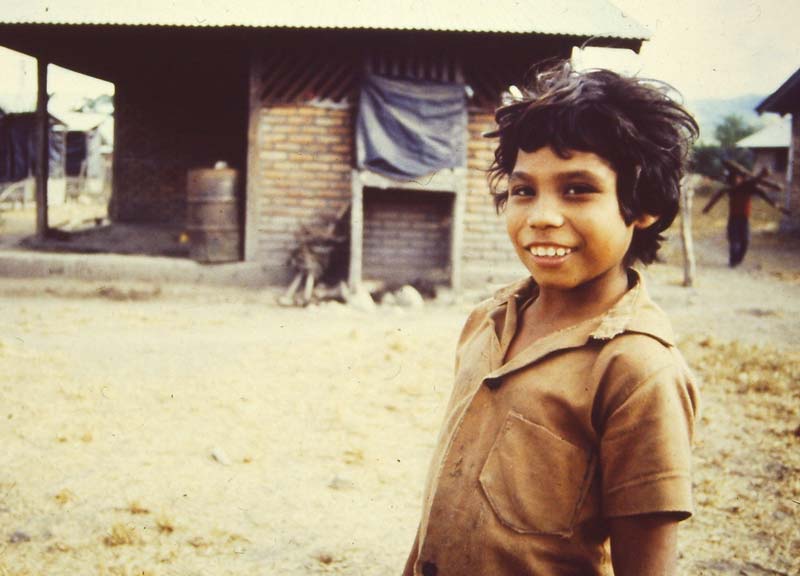
Now that the opposition newspaper La Prensa is open again, and uncensored, Nicaraguans get to read the same lies, in between elements of truth, circumstantial evidence, exaggerations, front page stories built around a statement taken out of context, etc., that are found in the American press. The strength of the Contra’s position is exaggerated, the role of their U.S. backers is ignored, and the Sandinista government is blamed for all the country’s economic problems, ignoring the fact that the U.S. has been waging economic as well as a military war on this tiny impoverished nation for eight years.
Fond greetings from the revolution my father calls, “perhaps the most important social experiment of our time.”