
5. San Cristóbal de las Casas and area, Mexico, 1987
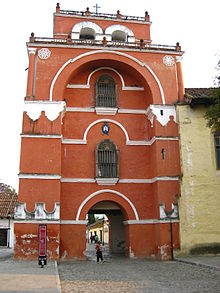
El Arco del Carmen in San Cristóbal del las Casas. Source: Wikimedia Commons.
On my return to Mexico City, I picked up my camera and finally left what had begun to feel like home, so much so that I would accidentally refer to Guadalajara as “Montreal”.
The 17-hour bus ride to San Cristóbal de las Casas was uneventful and even sleep-inducing, except that the seat in front of me got stuck in a permanent reclining position. In San Cristóbal I immediately came down with the worst cold I can remember. So I don’t have much to show for my nine days there. I did, however, really like the place.
It’s an old colonial city, the commercial centre for the indigenous villages which surround it. The indigenas (Mayan Indians) come in to sell things to the many tourists, but basically they go on living their lives and are indifferent-to-hostile towards the tourists.
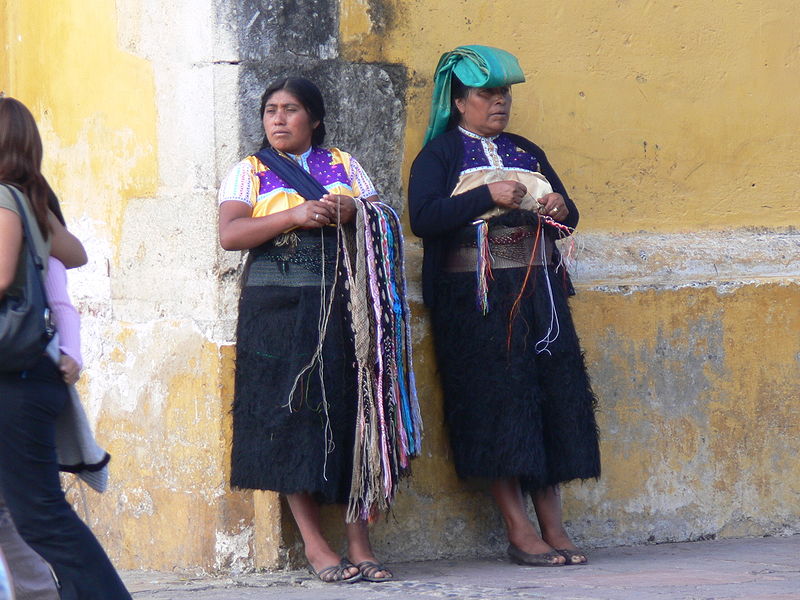
Tzotzil women selling woven items in a street in San Cristobal de las Casas. Photo by Wolfgang Sauber, Wikimedia Commons
Many of the Indians believe that taking a photo of a person steals something of his or her soul. Some tourists get into the thrill of the hunt when they take pictures, but wielding a camera ultimately made me feel like an invader. Seeing how other tourists stand out reminded me of how I stand out myself, and it was hard. I have to get used to it; it won’t get any better.
San Cristóbal is a centre for aid to Guatemalan refugees living in Mexico. I would have liked to follow up on my contacts, but my illness got in the way.
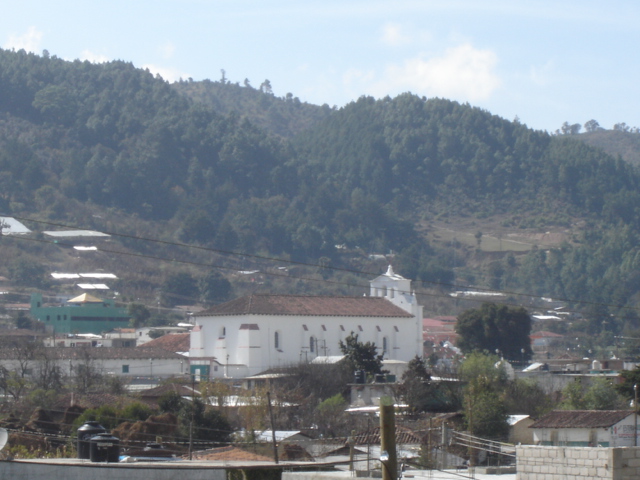
Zinacantán. Public domain photo from Wikimedia Commons
I did get to make two trips out of town, one to the festival of San Lorenzo in Zinacantán, a village where men and women wear hot pink ponchos or shawls, making for a brilliant visual effect. These people, however, are among the most hostile to picture-taking, so the images in my mind must suffice. There was a dance band, beer and soft drink stands, food stands, dance contests, noise-making explosives, and the church was full of flowers and candles and people. And all that pink!
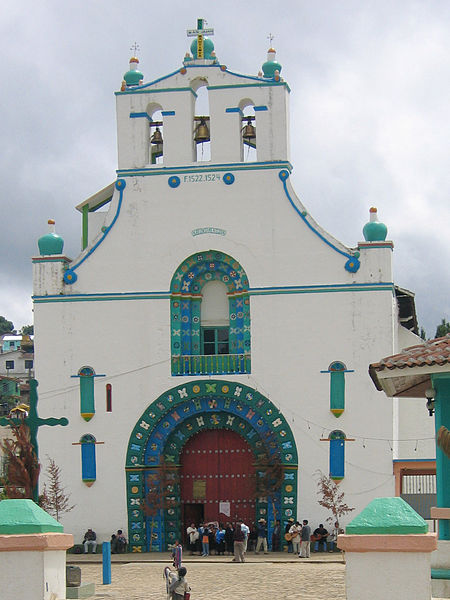
Church of San Juan, in Chamula. Photo Raymond Ostertag, Wikimedia Commons
The second trip was to San Juan Chamula, the largest of the villages, where two tourists were once stoned to death for ignoring the no-photos-in-the-church rule. I was very impressed by the respect the people had, and insist that tourists show, for their church. You have to pay 300 pesos each to get into the church. Inside, the ceiling is draped with flower-printed cloth. Along the side (there are no pews) are robed statues of saints, some behind glass, and the litters used to carry them in processions. Groups of lit candles on the floor are attended by family groups, seated or standing. The feast of the Assention had just been celebrated, so there were many flowers.
While I was there, the president of the Supreme Court arrived on an official visit and received an official welcome from the village elders in their black ponchos and be-ribboned straw hats. The delegation from away definitely stood out with their makeup, fancy clothes, and confetti of welcome in their hair.
According to the guide book, one can walk from San Juan Chamula to Zinacantán. We set out on a lovely road, through sheep grazing lands, corn milpas, and scattered houses. After three hours, we finally arrived, we thought, when a man greeted us with “Where are you going?”
“Zinacantán,” we answered confidently.
“Hmmm … Zinacantán is back that way ….”
We took a narrow footpath down a hill and through cornfields, past people working, fetching water, chatting in late afternoon, or watching the sky for rain signs. Then we climbed a steep hill, asking for directions often, made the steep climb to the summit, and there far below us in the next valley was Zinacantán.
A precipitous descent with mud-skiing down paths in cornfields, a wade through a river and finally a long hike brought us there after the last collective transport had left, so we rode back to San Cristóbal in the back of a big truck.
My first outing after being ill turned out to be more than I’d bargained for, but it was a welcome dose of adventure.