
9. Shopping in Nebaj, 1987
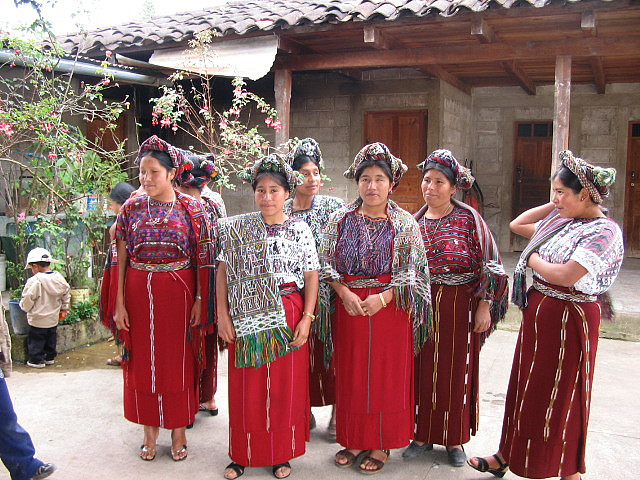
Women in Nebaj, 2007. This could be in the courtyard of the place I stayed. It could even be the same young women, 20 years later. Photo by Flickr user Susana Soto
As soon as I descended from the bus, I was surrounded by a half-dozen beautiful, charming teenage girls in the richly embroidered multicolour huipiles (blouses) of Nebaj, long red cortes (skirts) with thin gold stripes, and wide embroidered belts which are worn tightly (“corset-like” was my reaction when someone squeezed one on me).
“Do you want to buy tipica?” (i.e. articles of traditional dress and other weaving).
“Come to my house – I’ll give you good prices.”
“We’ll take you to the hotel and then you can come to our houses.”
“What’s your name?”
“I’m Catalina, and this is Elena, and this is. . . . ”
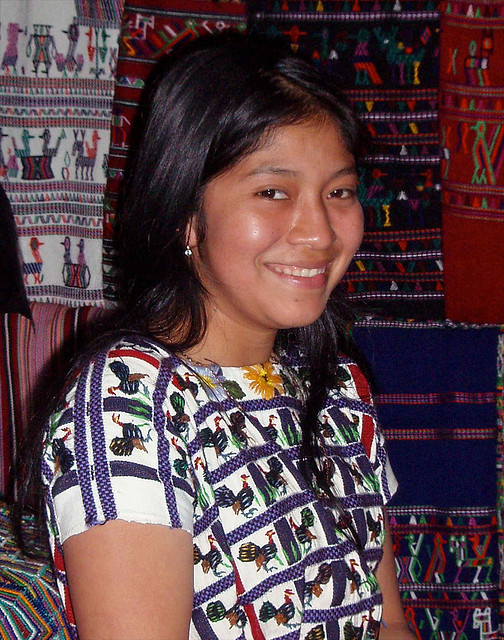
Nebaj girl in 2007. Photo by Flickr user Lon&Queta, who note: “Her huipil is from Santiago Atitlán. New trend of wearing “foreign” huipiles (from other parts of Guatemala). Used to be that no woman would wear anything not from her own town!”
“Do you want to buy huipiles?”
“Look first, then buy!”
“Come to my house first because I saw you first!”
“No, I did!”
“I’m first, then Elena, then Maria, then. . . .”
“No, Maria then Elena!”
Thoroughly confused (more so because Elena was a deaf-mute), I headed with this chorus to the hotel.
“Look,” I said, “you all sort out the order; I can’t remember. I want to rest first, and then I don’t have much money anyway, but. . . .”
“Yes! First rest, two hours.”
“Remember I’m second, and she’s first, and Elena’s third. . . .”
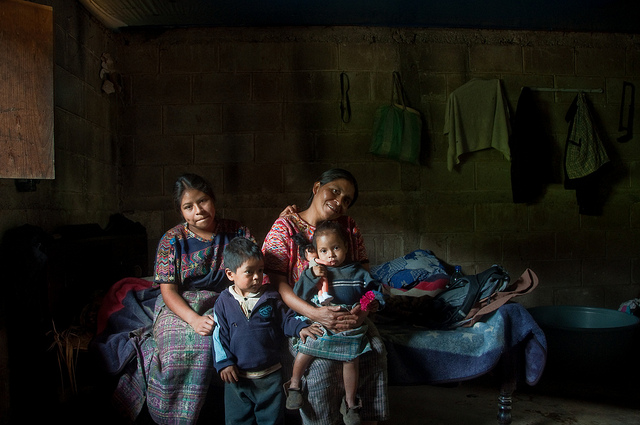
Inside a home. Photo by Flickr user orionlee.
I did get around to five houses before darkness, rain and hunger drove me back. The old houses of Nebaj are large, dark adobe (mud-brick) caverns with dirt floors, wooden platform beds, a wooden cabinet where the incredible clothes are kept, maybe a table, a chair, not much else. Some have assorted pictures on the wall, some porches or courtyards.
The selling tone regresses to whiney when it seems you won’t buy. This may work with some folks, but my resistance goes up when people try to appeal to my guilt.
I ended up buying three small used items, including one of the amazing belts.
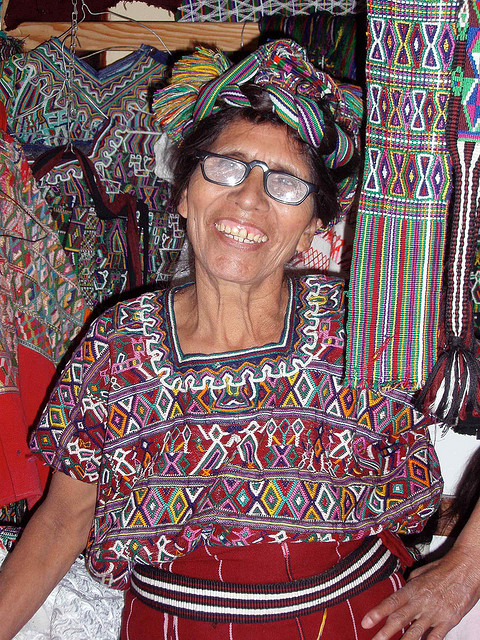
Seller of traditional clothes in Nebaj. Photo by Flickr user Lon&Queta
One of the reasons you can buy beautiful cloth so cheaply here is that the weavers don’t place a value on their own labour. An American woman working with a project here explained to me that the local women think only of the cost of the thread, and consider anything they get over that material cost as their profit. She is trying to get them to charge Q1.00 (50¢ CDN) per hour of their time, and add their profit to that. Prices would really go up but tourists would still be getting great deals.