
12. Orphanage in San Lucas Tolimán, 1987
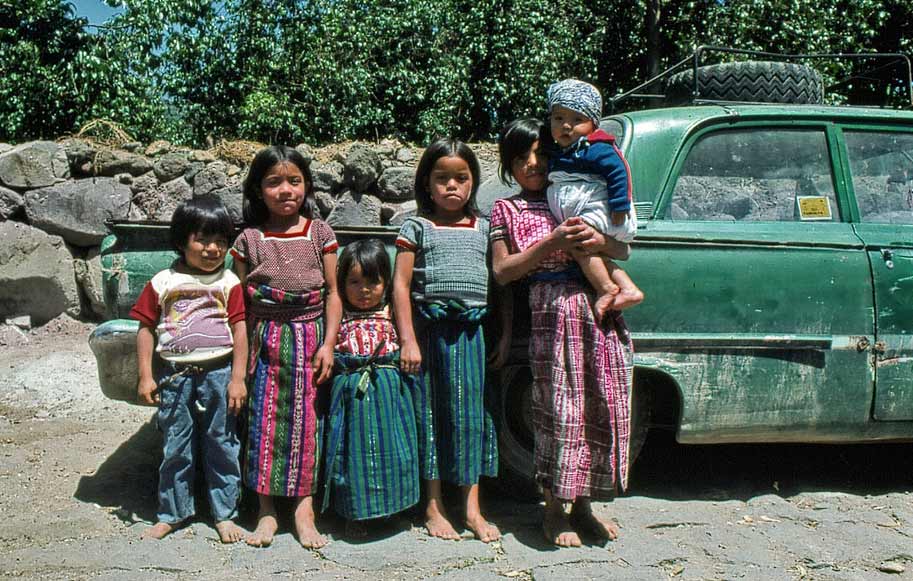
In San Lucas Tolimán I visited an orphanage. As a child, I’d always wondered what growing up with many other kids and no parents would be like. This one has about 120 boys and girls from ages 3 to 19. About half of them lost their parents in “the violence” of the early 1980s.
I wandered in on a Saturday afternoon. Some older kids were playing basketball while younger ones were milling around. Almost immediately, while others drew back shyly, some of the little kids latched on to me, hugged, me, clung to me. They had such a need for physical contact and affection that any stranger would do. They explored my hair, my skin.
I had a quick tour of the facilities: dorms with bunk beds, six or more to a room, classrooms, a big dining room which was being decorated for some event, a kitchen with wood stoves and big pots. “We’re having a show tonight! Will you come?”
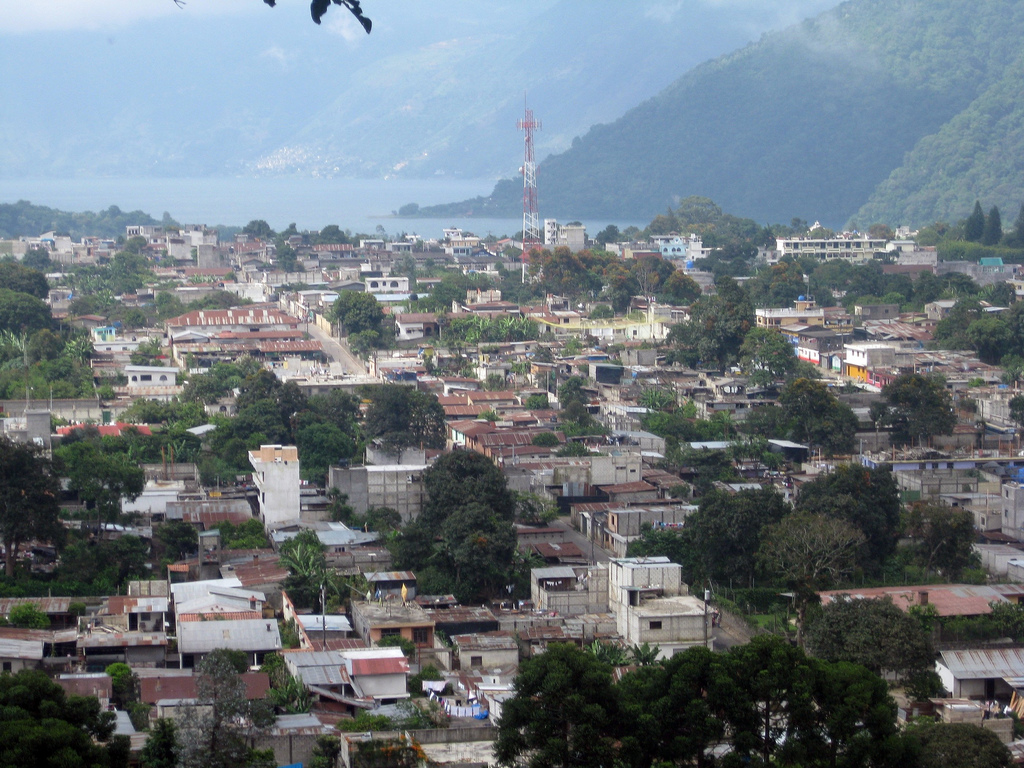
Arriving back at 7:30 in the evening, I was ushered into the dining room and a 17-year-old girl wearing huipil and corte invited me to sit beside her on the wooden bench against the wall.
“Where are you from?” I asked.
“Quiché.”
“How long have you been here?”
“Since 1982. My parents were killed in the violence.” She proceeded to describe how she lost older siblings, grandparents and parents, how some disappeared and others she saw tortured. She and her three younger siblings were left in the care of a relative who brought them here; for this act the woman lost her own life.
“It was very hard, the violence.” She said all this dispassionately, matter-of-factly. She had told the story many times before, it seemed, but still needed to tell it – for herself, and for people to know. Perhaps the emotional connection had gone numb so that she could talk about it. Her youngest sister, who didn’t remember her parents, joined us as the show began.
The show was in honour of all those who had birthdays that month. The most common type of act was a girl or a group of girls dancing to a popular song. There were a couple of singing acts, a recital of poetry, and a puppet show.
The last act was a surprise. Mother Ana, the American nun who directed the orphanage, and the Canadian visitor would compete in a dance contest!
Pint-sized partners had been chosen. We danced. The vote was taken – a diplomatic tie. The tie would have to be broken, it was announced, and we would change partners. I decided to go for broke, and used my big flouncy red skirt to full advantage.
“Those for Madre Ana!” Hands started slowly going up. A few.
“Their loyalties are divided,” laughed Ana in English.
“Those for the visitor!” Wild cheering and applause.
After popcorn and kool-aid the floor opened for general dancing. Need I say that the coolest guys in the school kept me on my feet until 10 pm and lights out.