
The First Wave, 1750-1752
I wrote this dramatization of the settlement of Lunenburg, Nova Scotia, by “Foreign Protestants” from the Rhine area of Germany and Montbeliard (now part of France) in 1998 for a collaborative website project funded by the Canadian Heritage Information Network (CHIN).
UPDATE 2022: The original website is no longer online. In 2014, some sleuthing brought me to an obscure corner of the CHIN website where it had been archived as a Teachers’ Centre resource. That site is no longer available, and my contribution there doesn’t seem to have been archived by The Wayback Machine at archive.org either.
So I’m happy to have published my original text here, as well as the images I sourced in various museums and archives in Germany and Nova Scotia, with larger image sizes than were permitted in the dial-up days of 1998!
All that’s missing are the full credits, which were properly obtained and documented on the CHIN site. I probably have the original signed release forms in a bankers box somewhere.
For the record, here are the 2014 links to the CHIN site: the text and images (here) and the credits (here).
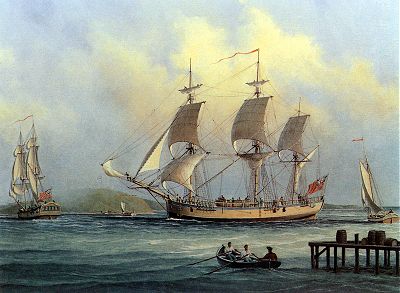
The first wave of German emigrants to Canada arrived between 1750 and 1752. Discover their story.
The emigrants who tell this story are composite characters who represent the experience of many. John Dick is a historical figure.
The emigrants who tell this story of their journey from Germany to Nova Scotia (now part of Canada) are composite characters who represent the experience of many. Only John Dick is a fully historical figure.
ANNA ELISABETH MEISSNER, Early spring, 1751
(Her name and some details are real.)
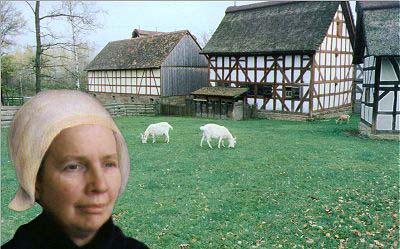
It is decided: we are leaving our village, just my husband and I and our children. I can’t imagine it. I have never been farther away than a day’s walk, to attend a festival in town or go to market. And that, and the fields and woods around here are all of the world I really know. Everything I’ve grown up with, I have to leave behind.
I can’t see how we could stay, not if we are going to feed our children and make a life for ourselves. My husband is a good man and a hard worker. But the Count takes the best of his labour and leaves little for us. For seven years, we have lived with my husband’s parents and his brother’s family in this crowded house. When will we be able to build our own? We can scarcely feed ourselves! Last fall we were harvesting the Count’s grain when the deer ate our best cabbages. And the winter came early and hard. The grain we had wasn’t enough. The baby cried so much, he was so hungry. My milk wasn’t enough for him anymore. He took fever, and now lives with the Lord in Heaven. But I won’t see another child of mine die for lack of food!
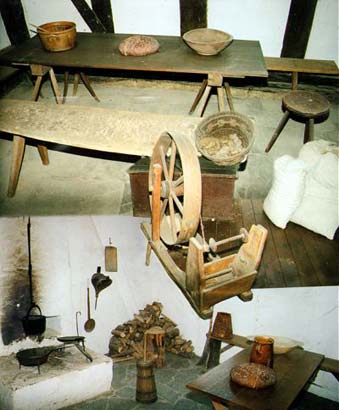
We heard of Nova Scotia when a stranger came to the town and held a meeting. The mayor said he was an agent of the British government. They were looking for people – good Protestants who would cross the great ocean and settle in Nova Scotia. We would get our own land, and tools, and food for a year. We could even pay for our passage by working for the government when we get there. There was a big discussion. Some said it was too good to be true, that the land was poor and we’d have to fight the French as we did here. But the stranger assured us that Nova Scotia was a very fine place, and far from France, and we could make a good life for ourselves there.
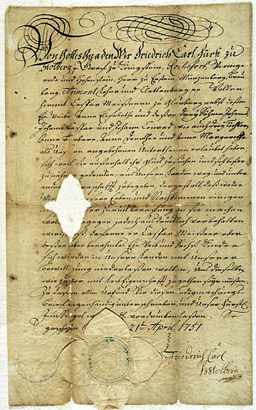
When my husband went to the Count for permission to leave, we thought we would have to buy our freedom, but the Count let us go! But if by some miracle we ever come back, we will still belong to this land and have to work for the Count. And our family too. It’s all written on a piece of paper that my husband hid in a safe place, even though he doesn’t know how to read it. It’s our “pass,” he says. We’ll need it as we’re going to Nova Scotia, first on the long trip down the great Rhine, and then for the British.
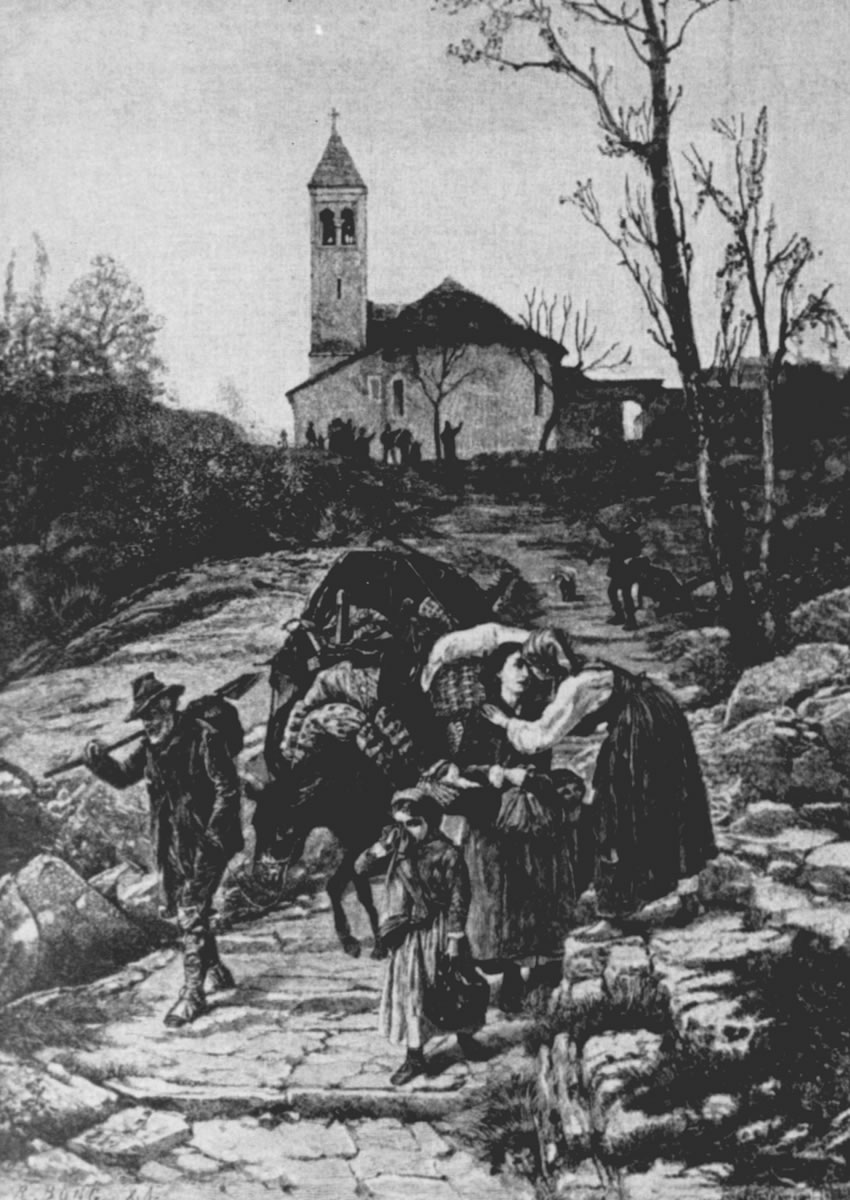
Auswanderer auf alter Zeitungsgrafik, by Sigfried Stölting, Worpsweder Verlag.
And what else will we need for the long journey? Money – from what little we can sell. They say they will give us tools in Nova Scotia. For clothes we only have our everyday things and our Sunday dress. When these clothes wear out, what then? My spinning wheel is too big to carry. We will take as much food as we can carry and as much as the family can spare us – smoked meat, dried apples, grain, black bread, sauerkraut and maybe some cheese. The pig and the goat we must leave behind. But we must have our bedding, and our Bible!
The pass the Count granted is our chance to go. But my heart is breaking in two. I’ll never see my dear old parents again, ever, or my brothers, unless they follow us – oh, how I hope they will. Life HAS to be better in Nova Scotia.
THE BOARD OF TRADE, London, 1749:
A short Account of the Colony and the present state of it
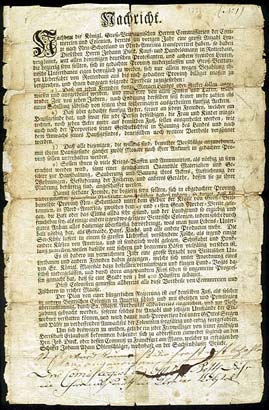
… “that the Climate is as healthy, and the Soil as Rich and fertile as any other of the British colonies, affording, when cultivated, all the Comforts and Conveniences of Life. That the Seacoast abounds with Fish in greater plenty and variety than any other part of America and is peculiarly adapted to Commerce and Navigation. . . That the Inland Parts are very proper for the cultivation and Produce of Grain, Hemp, Flax and all other Commodities that are to be found or produced in other parts of America, and which are now produced in all such parts of this Province as have been hitherto cultivated. That a number of British Subjects were this year sent from England to settle… That the said Settlers have had constant Supplies of fresh provisions from the French Inhabitants of the said province who remained there after the Treaty of Utrecht … and whose Farms produce Corn and Cattle in great Abundance….”
JOHN DICK, Rotterdam, Holland, June 1752
I was contracted by the Board of Trade in London to procure settlers for Nova Scotia in 1749. How much I’ve had to learn! I’ve just seen five ships carrying over a thousand souls leave here from Rotterdam near the mouth of the Rhine for Halifax – my best year so far! It hasn’t been a lucrative business – on the contrary, I’ve lost money and still hope to make it up in future years, now that things are working well. Three years ago I was a young merchant here in Rotterdam. Seeing central Europeans streaming through this port on their way to the American colonies, I became eager to participate in that enterprise.
The Board of Trade authorized me to make an offer to foreign Protestants willing to become British subjects. Each man would get 50 acres of land in Nova Scotia, plus 10 acres for every dependent woman and child, and more land as their family grows or as they able to cultivate it. They would also get free subsistance for 12 months, and all the tools, arms, building materials they will need.
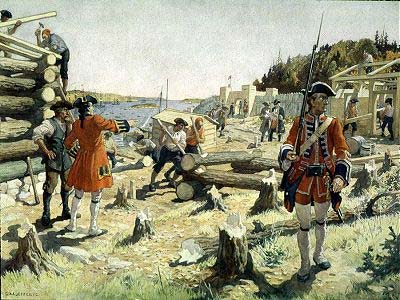
So I sent my agents up the Rhine to Protestant areas of Germany, Switzerland, and France. They reported great interest. The biggest problem was that most people willing to emmigrate could not pay their passage. It is common for settlers going to the American colonies to work off their passage once they get there by selling themselves as indentured labourers to local businessmen or farmers, who pay their fare to the shipmaster. By my scheme, the settlers pay off their passage by working for the government of the colony. They are treated better this way than newcomers in the more established colonies. The Governer certainly needs the manpower for building fortifications and other public works. And it gives me an advantage over the competition.
The competition! They did everything they could to frustrate my efforts and turn the hearts of my settlers from Nova Scotia. They would meet the emigrants on their way down the Rhine, pretend to be my agents, sign them up, then intimidate them with false stories about Nova Scotia being a barren land where they would have to fight the French and Indians. They’d persuade my people to go to Pennsylvania or Carolina instead. They had bad accounts of Nova Scotia published in the newspapers. They even misrepresented my efforts to the Board of Trade.
With all these obstacles, in 1750 I was only able to send off one shipload of settlers, the Ann.
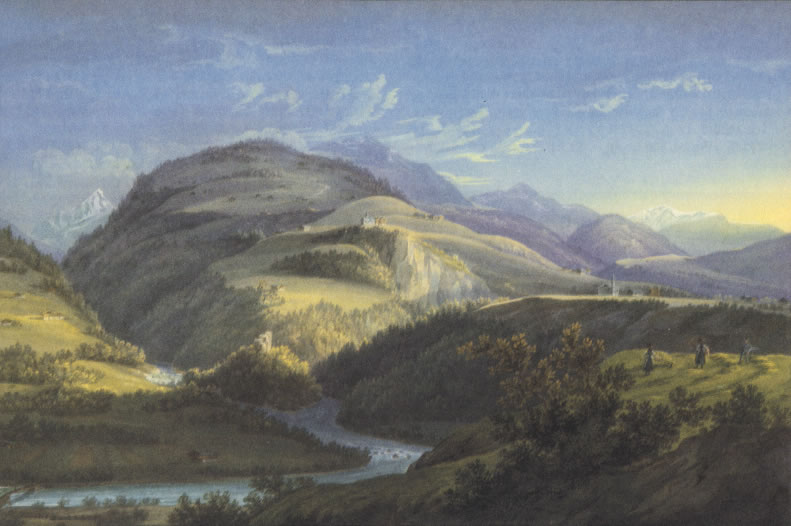
Immediately I started preparing for the next year. I had six agents recruiting in Germany, Switzerland and France. I procured passports from the King of Prussia and from the Netherlands to speed up my recruits’ transport down the Rhine. I also made improvements to the shipping arrangements. I had ventilators installed on the ships. And I made changes to the food carried on the ships to make it more suitable for people unused to eating salt meat. I made sure that extra water was carried. Still, it is expected that some people will die before reaching Halifax, as the journey is long – as much as 3 months – and arduous. We can only try to minimize the loss.
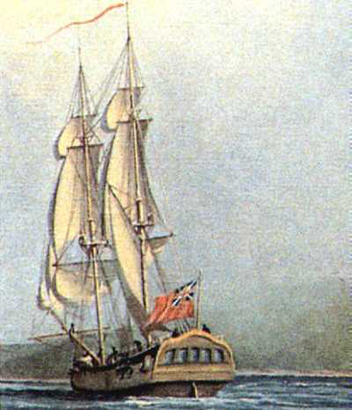
In 1751, four ships of my recruits sailed for Halifax containing a total of 1004 people, 918 of whom survived the voyage.
As soon as those ships left Rotterdam, I was busy preparing for the next season. Then suddenly at the end of December the Board announced that they wanted no foreign Protestants shipped to Nova Scotia this year. I had already engaged about a thousand persons, some of whom had sold property in preparation for departure. In the end we agreed that I could send 1000 emigrants if they would work off their passage at only one shilling a day, and accept threepence a day to purchase their food in the market rather than having the food supplied through government agents. And I did finally send off these five ships by early June
P.S. Dick’s contract with the Board of Trade was suspended later in 1752. It was never revived.
JAKOB, age 9, summer 1752
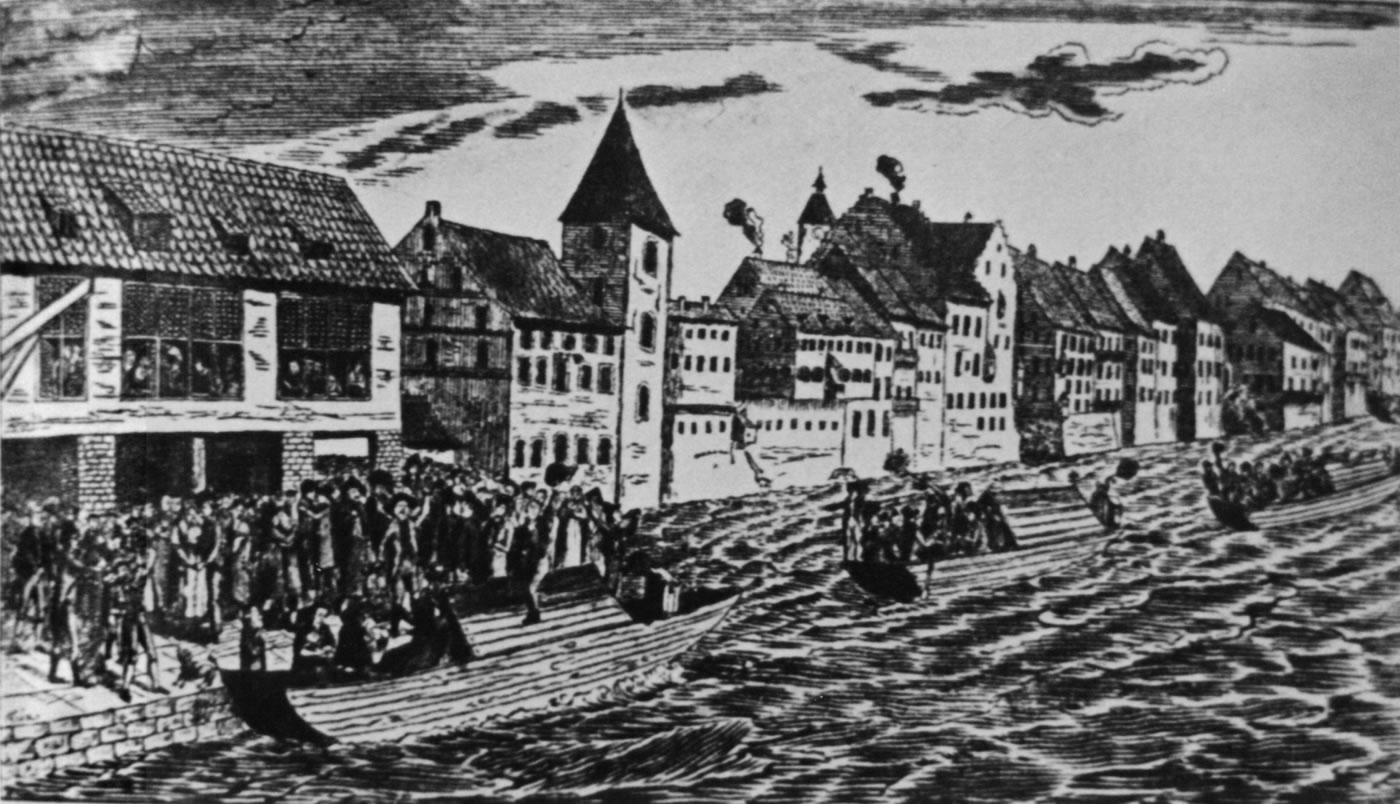
At first, I was so excited! A boat trip! Father hired a wagon to take us to the river where we met two other families going to Nova Scotia. There, we all got on a boat with all our bags and boxes and set off down the river. For a while it was fun to pass all the houses and churches, and the hillsides with grapes, but there was no room to run around and nothing to do on the boat and I got very bored.
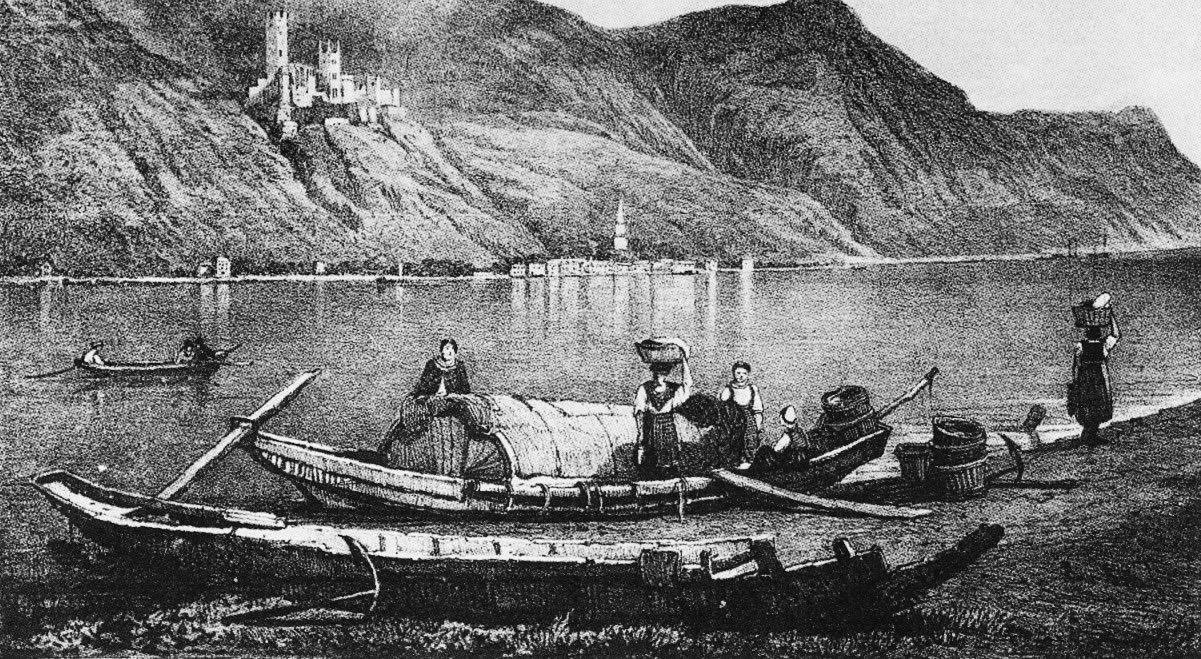
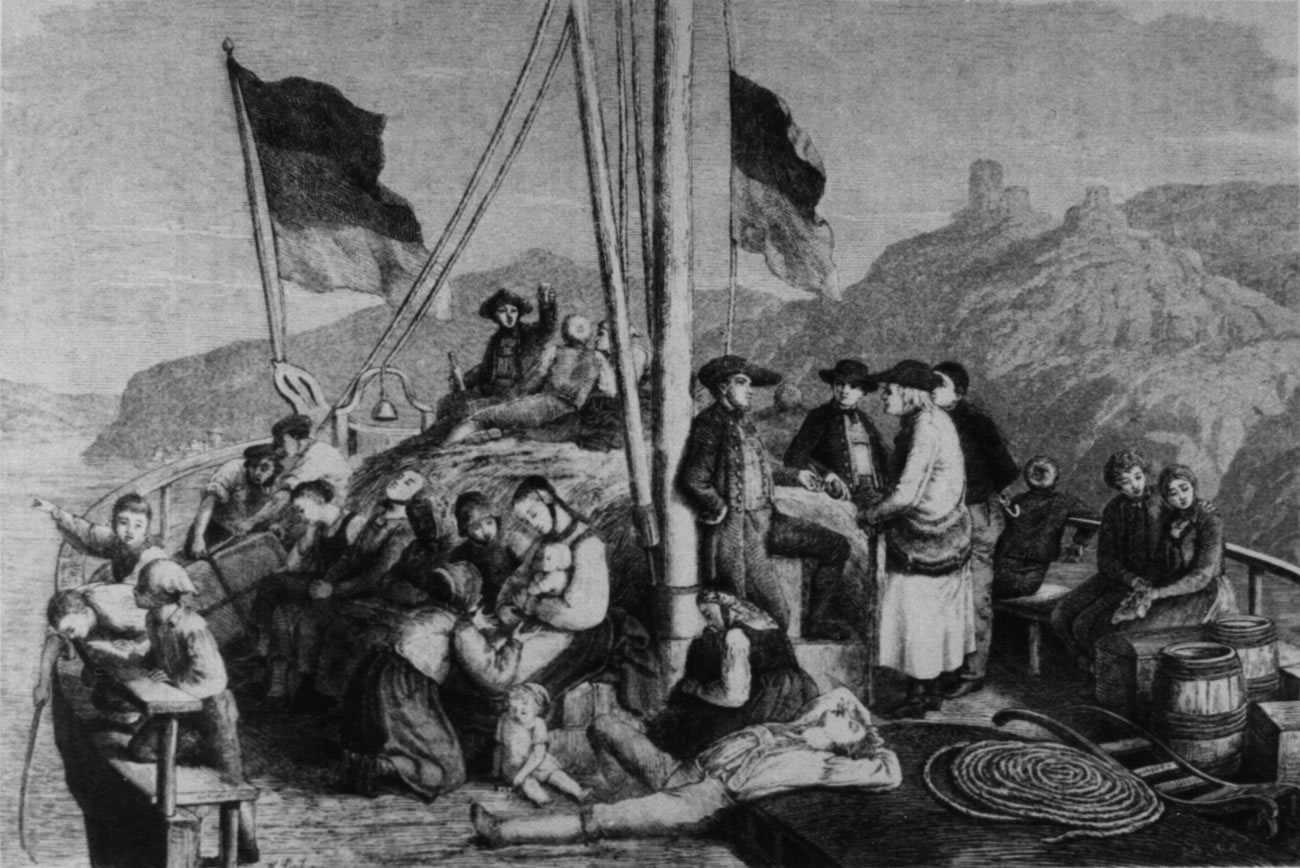
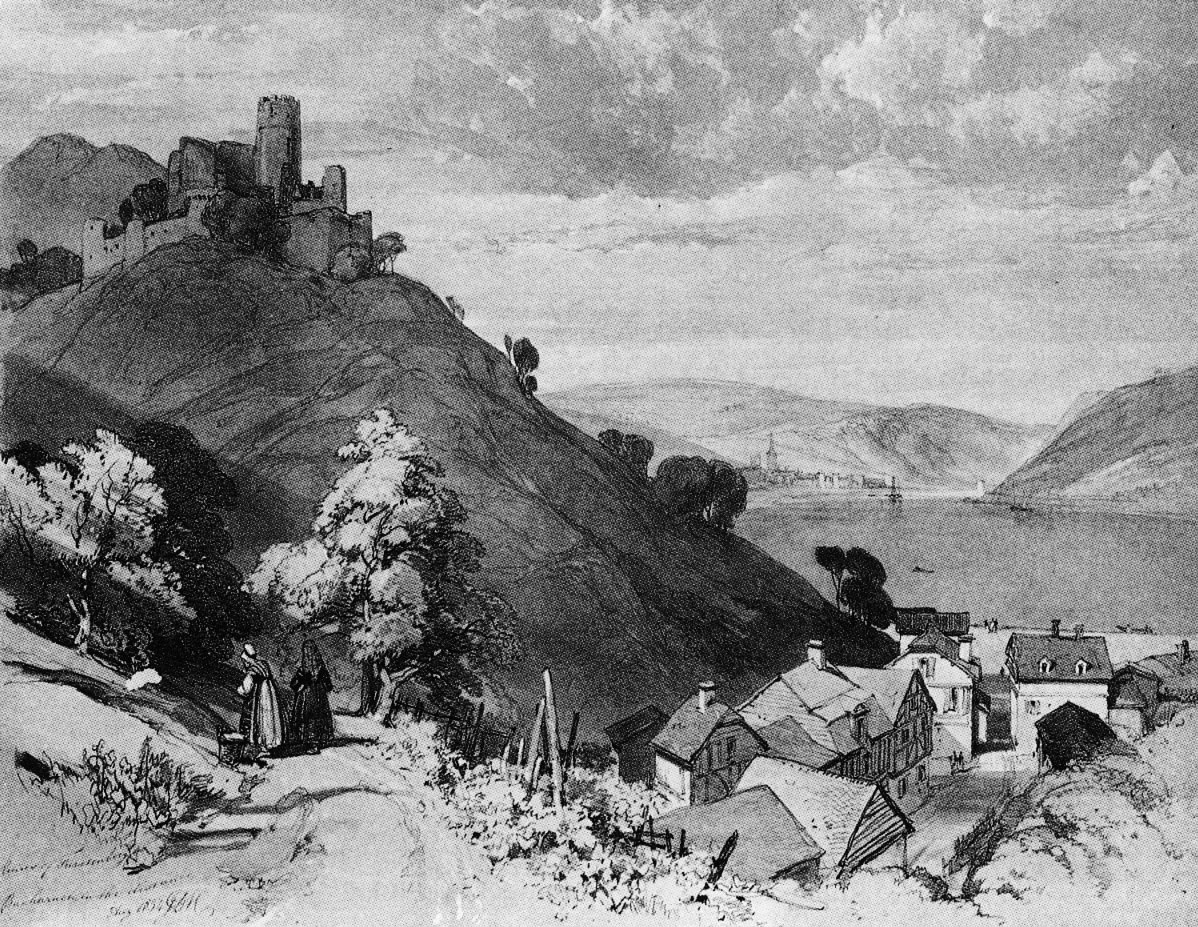
Then we got to a bigger river. The Rhine! There were big cities surrounded by walls, with lots of boats coming and going. So many people in one place! And there were tall hills with castles on them. On the boat there were just people and luggage, and nothing to do but sleep and eat, and pretty soon I was missing home so much that I cried. We had to stop at the borders, and Father had to show his papers and pay some money or else they would have made us get off. He got more and more worried as his money got less and less.
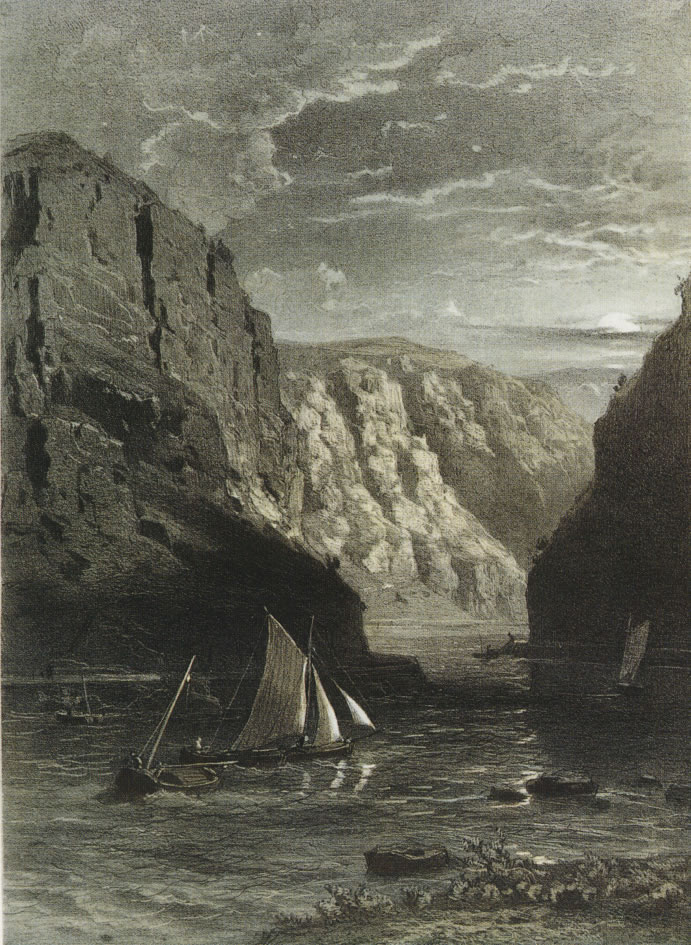
One place was really scarey. High rocky cliffs edged the river on both sides. The water was swirling, and the boatmen got very serious and shouted at each other and their voices echoed over and over again. I was frightened because a sailor had told me about a beautiful woman who sits on the top of the cliff, combing her long blond hair and singing a strange melody. Boatmen are fascinated by her voice, he said, and they don’t watch the river. So it’s her fault that many ships sink in this place. But I watched and saw what the real danger of the Loreley was. The Rhine gets much narrower and there is a sharp curve which makes it difficult to navigate. But the worst problem is the rocks under the water which you can’t see. That’s why so many ships sink.
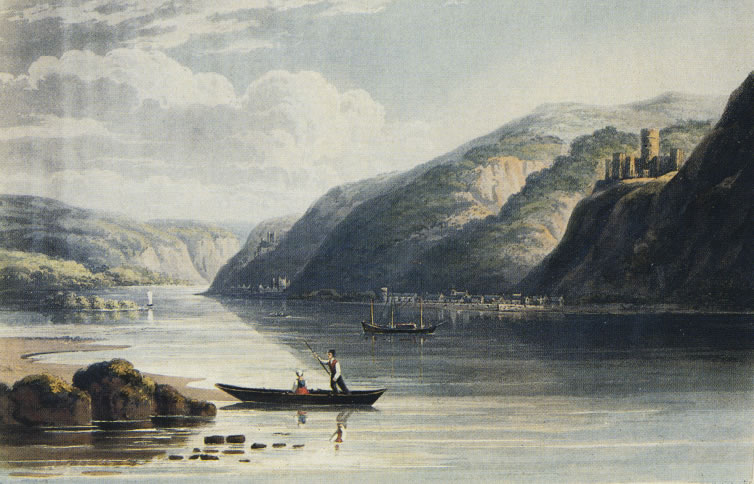
Our boat passed many villages, castles, and great cities with tall church spires. Then one day, a very finely dressed gentleman came on board. He was Mister Dick, Father told me, and he was in charge of our emigration. Now I know he was speaking English, but at the time it made no sense to me. There was much discussion before we continued on. The land was very flat, and there were many windmills. We’d arrived in Holland, and we were soon in Rotterdam.
After weeks of nothing to do, suddenly there were so many people and so much noise. We were hustled into a shed, where we had to wait in line for a long time. Then when it was our turn, Father had to talk to a man seated at a table who asked questions. What were our names, and where did we come from? Father told him my sister was four years old, even though she was five. But I held my tongue because it meant that Father didn’t have to pay for her passage. I was “half a freight.” Then my father wrote his name on the paper, and I was very proud, because the man in front of us had only been able to make an “X” with the pen.
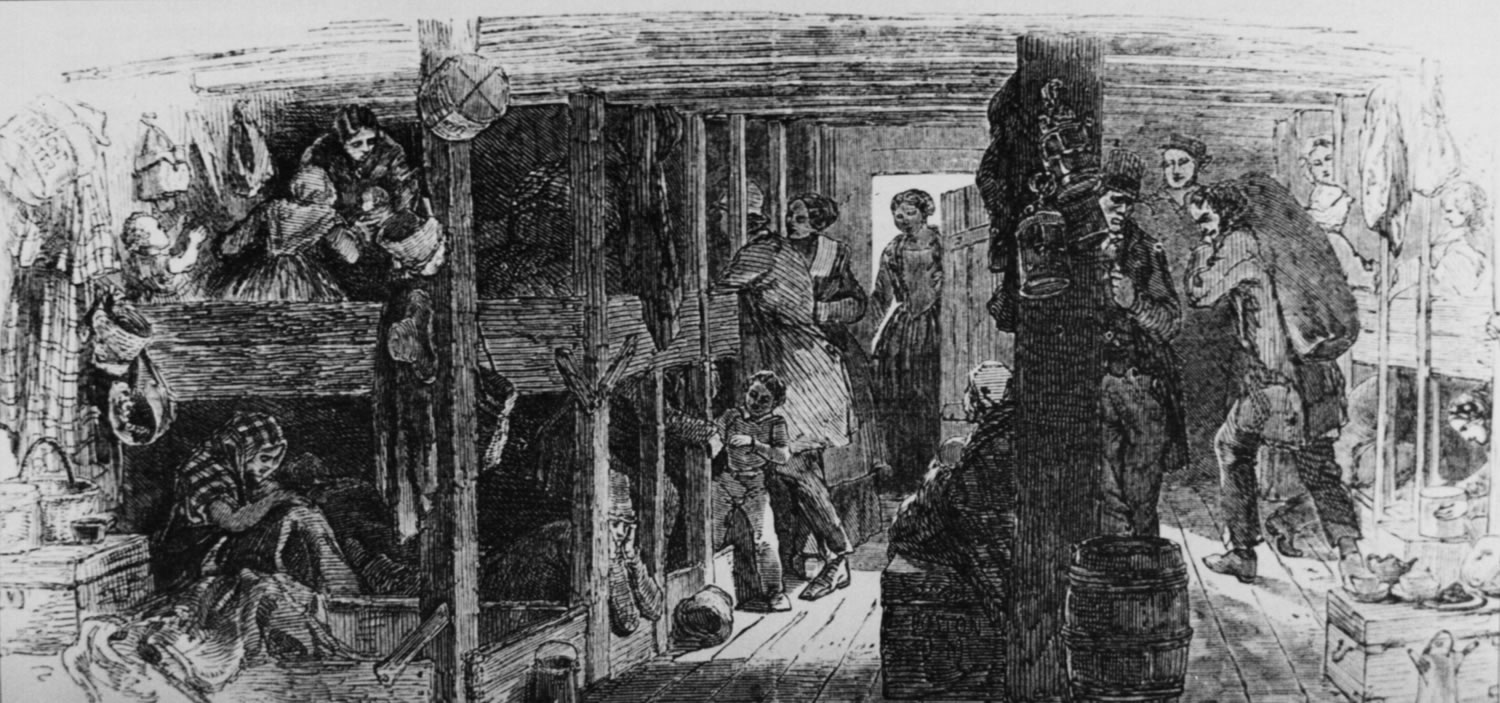
Then we boarded the big sailing ship that would take us across the ocean. I wanted to explore, but Mother told me to stay close to her. A man made us go down a ladder to a huge semi-dark space filled with wooden platforms with people and baggage on them. Father found an empty one for us in the middle. Then there was a lot of commotion and noise, and the boat started moving. Father was talking excitedly with some other men. Mother was praying.
The next day we were allowed to go on deck. The land seemed very far away. Mother cooked a thick soup with some barley she had been given. We were given some water and told that we had to be very careful with it because the water on the boat had to last until we reached Halifax.
After some days, we stopped in a harbour in England. It took some more days before the British officers had looked at everything and said we could go. Then we were off again on the great sea, and in a couple of days when I went up on deck, there was no land in sight at all.
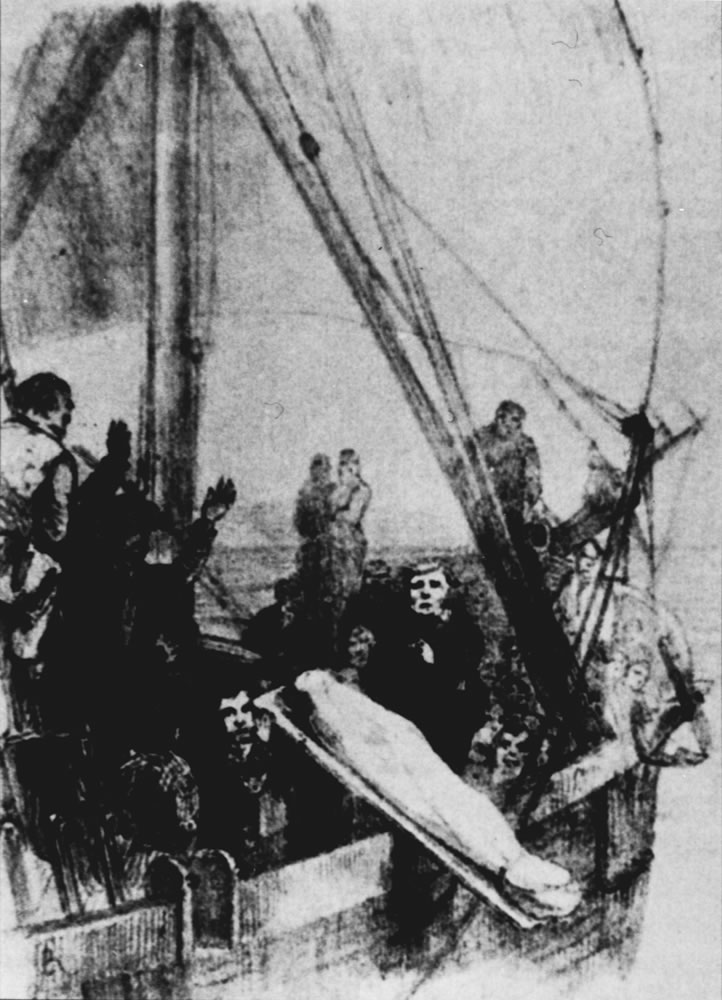
After that were long days and weeks of nothing to do. Most of the time we had to stay below deck, where it was pretty dark, and stank from so many people. During storms was the worst, with the boat rocking this way and that, and you just had to hold on and try to stay in your bed and not throw up on anyone. Then I got really sick, and I don’t remember much – it was a terrible nightmare. One morning I could open my eyes and saw my mother smile at me, but I could tell she had been crying. Then I learned that my little sister had died from the same fever I’d had, and her body had been left behind in the ocean. Other children had died too, and some adults.
In a few days I started feeling a little better and could eat a little, but didn’t feel much like playing. Then one day someone shouted that they could see land, and my father took me up on deck to see. The next day we entered the harbour and could see what looked like small villages on both sides, with small wooden houses. I could hardly wait to feel solid ground under my feet again, but we stayed on the boat for many days. Some of the passengers were still sick and even dying, and the people in Halifax were afraid of getting the same sickness. By the time we were allowed to go ashore, the excitement was gone, and I knew my parents thought my sister would not have died if we had stayed at home.
JOHANN SCHMITT
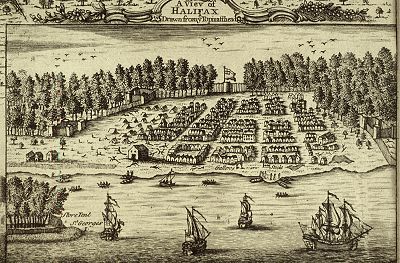
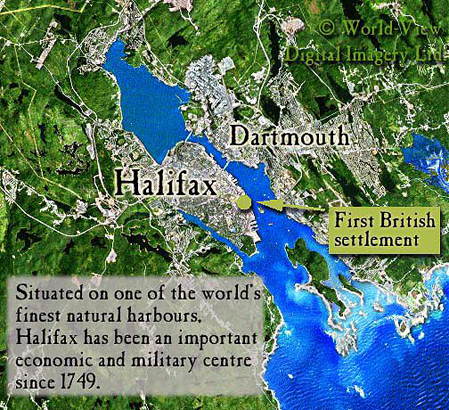
My wife and I landed in Halifax in 1750, exhausted after a long sea voyage. We were quite unprepared for what we would find there. The first settlement had been made only a year before, and it was a rough and chaotic place being built out of the forest. We wanted to get to the land we’d been promised and start building our new home, but that was not possible. The French Acadians living to the northwest and the native people of the land were not happy about this new influx of people, and the Governor was concerned with protecting Halifax against attack.
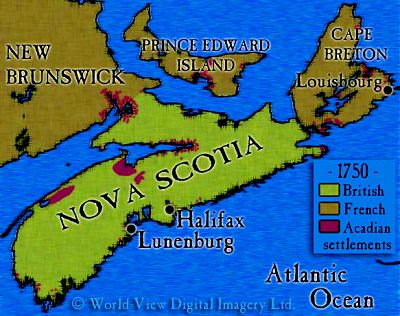
As I owed most of the money for our passage to the British, I was set to work building fortifications. We stayed that winter with other families in barracks, and managed as best we could with the food they gave us – hard bread, salt beef and pork, butter, dried peas, oatmeal, rum and molasses. We were terribly homesick.
The next spring we Germans were given small house lots to the north of the main town. The land had been cleared of trees and we eagerly planted a little garden among the stumps – our rations would run out that summer. We built a small house too. But the soil was thin and full of large stones. All the while, I continued working on the fortifications, which were necessary for the colony’s safety.
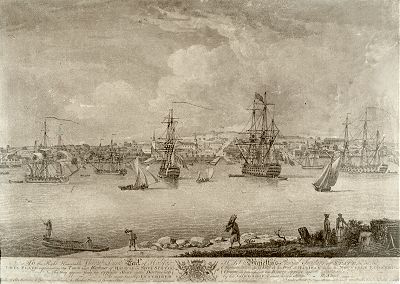
Other Germans were arriving and building villages farther away on the isthmus where a palisade was being built. By the next year, I was free of debt and found work here and there for other people, clearing land. But I struggled to feed my growing family. There were new people arriving who had nowhere to go and the government seemed unable to arrange for everyone’s welfare.
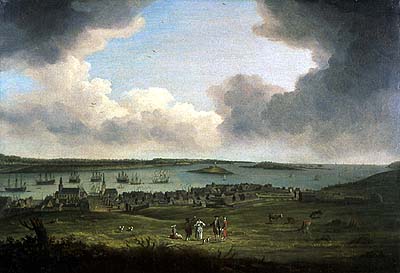
Thus it was that I was eager to participate in the Governor’s plan to start a new township a day’s sail to the southwest where we could at last have the land that had been promised to us.
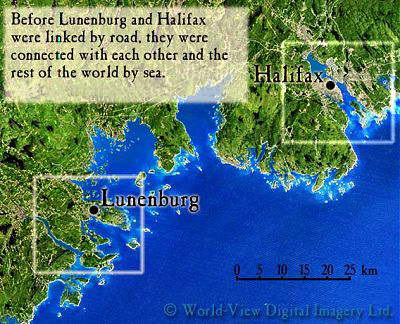
It was a happy morning on June 8, 1753, when we sailed into Lunenburg Harbour with a flotilla of boats filled with people and baggage, building materials and provisions. As part of the militia, I went ashore early to make sure the peninsula was clear. People had lived there before – there was some cleared land.
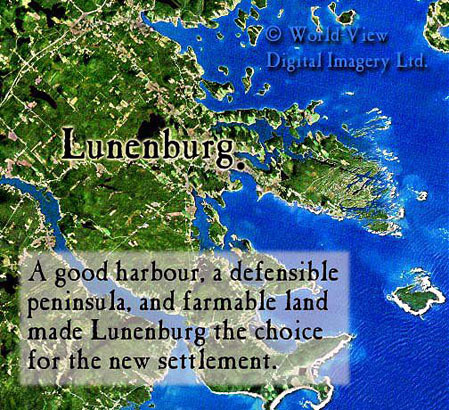
Under Colonel Lawrence’s direction, we set to work building blockhouses for defense and barracks to live in. But the Colonel’s careful plans could not withstand our eagerness to build our own houses and start the new life we had been dreaming of for so long. Within 11 days, we held our first church service and received our own town lots. By summer’s end, every family had some kind of house and a garden.
I wish we had returned to Halifax for the winter, as some did, because it was hard to keep our little house warm. I kept busy clearing our new 30-acre lot outside the town. But it was harder for my wife and the little ones.
The next year, 1754, we put in a bigger garden, including potatoes, flax for oil and linen, oats, turnips and barley. I sold some timber cut from our land to a boat headed for Boston, which brought us useful cash. Some livestock arrived by the end of the summer and was distributed among us. Gardens did not do well that year due to drought. And over the winter many of the animals died for lack of food.
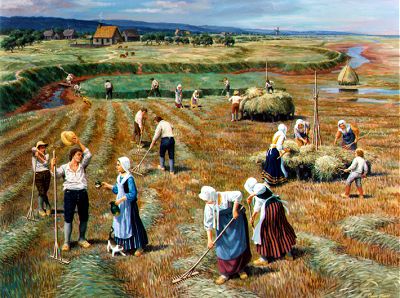
Grand Pré National Historic Site c. 1987
The year 1755 was one of great sorrow for the Acadians because they were deported from Nova Scotia. Many of their cattle ended up in Lunenburg by various means – a boon for us, especially given our losses over the winter.
The next few years were difficult for our little community. War had resumed between France and Britain. We had to fortify, and defend ourselves from raids by native people and fugitive Acadians intent on terrifying us enough to leave our settlement. And we had some particularly bad weather in those years. But we had come too far to give up now.
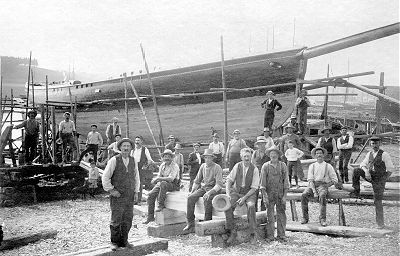
Artist: Unknown. Maybe Lewis A. Hirtle.
After 1760, our community was over the worst. We were becoming self-sufficient. Our economy and our population were growing and spreading out. Our children went to school. After the American War of Independence, Loyalists of German origin settled among us, bringing knowledge of shipbuilding and fishing.
It is good to remember Germany, and reflect on those difficult years when we first arrived here. It gives me a deep satisfaction to know that what I have, I built through my own efforts. And now I can truly say that this is my country.
LUNENBURG TODAY
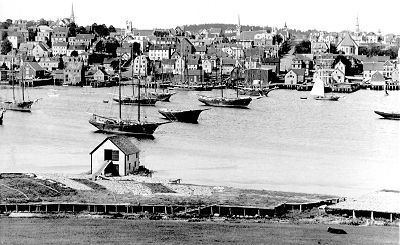
c. 1901
From its humble beginnings, Lunenburg grew and prospered. In the 19th century, sailing ships built there were world-famous for their sturdiness and speed. It had a large fishing fleet and fish-processing plants. At one time, Lunenburg claimed more millionaires per capita than any other town in North America. The beauty and the historical importance of the old part of the town contributed to it becoming a UNESCO World Heritage Site in 1995.
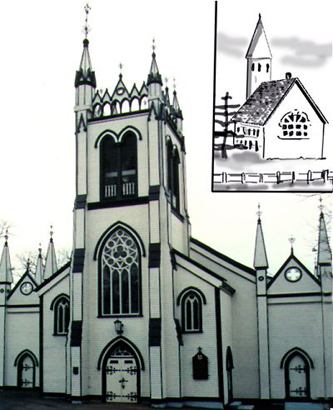
The decline of the fishing stocks have imposed new hardships on Lunenburg, but tourism is thriving. As always, Lunenburgers meet adversity with the resiliency and resourcefulness shown by the first settlers.
Lunenburgers continued to speak their own German dialect until the 20th century, and remnants of it can still be heard in the local accent and expressions.
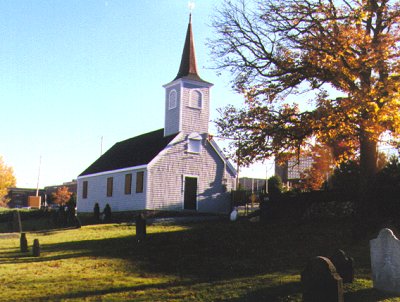
Many of the German settlers of the 1750s stayed in Halifax and contributed greatly to the city’s development. The “Little Dutch Church” built in the 1750‘s still stands in their memory.